
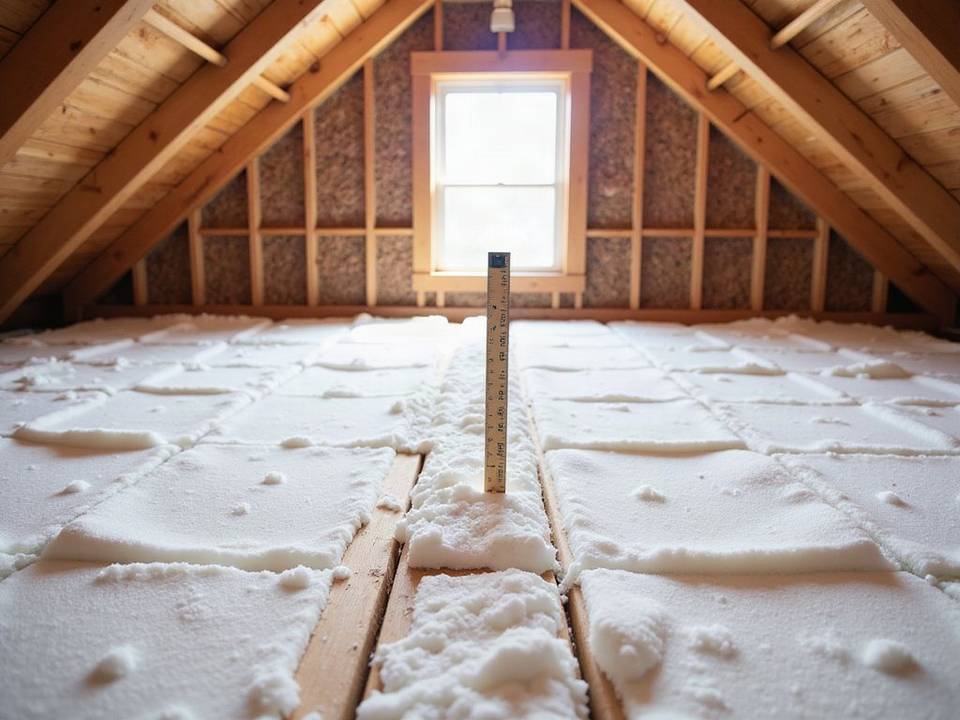
The short answer: for an attic in Central Texas, ENERGY STAR recommends R-49 if the attic has no insulation, or adding R-38 if you already have 3 to 4 inches. Bell County falls in the same recommendation as the rest of the hot southern climate zones.
That is the target. Here is what it means in real inches, how to check what you have, and why it matters so much in a Texas summer.
What R-value means
R-value measures how well insulation resists heat moving through it. Higher is better. Different materials give you different R-value per inch, which is why two attics with the same R-value can look very different in depth.
- Blown in fiberglass: about R-2.2 to R-2.7 per inch
- Blown in cellulose: about R-3.2 to R-3.8 per inch
- Fiberglass batts: about R-3 to R-4 per inch, depending on density
- Open cell spray foam: about R-3.5 to R-3.8 per inch
- Closed cell spray foam: about R-6 to R-7 per inch
Product labels and coverage charts list the exact depth needed for each R-value, and that chart is what a good installer works from.
What R-38 and R-49 look like
As a rough guide, reaching R-38 takes something like 12 to 16 inches of blown insulation, and R-49 takes more, depending on the product. Cellulose gets there in fewer inches than fiberglass. If your attic floor shows 4 to 6 inches of old, flattened insulation, you are likely well short of either target.
How to check your attic in ten minutes
- Get in safely. Use the attic hatch or pull down stairs, wear a mask and gloves, and step only on joists or a walkway. Go early in the morning, before the attic heats up.
- Look at the joists. If you can see the tops of the ceiling joists, you do not have enough insulation.
- Measure the depth. Push a ruler straight down to the drywall in a few spots and note the average.
- Look for gaps. Check around the attic opening, the eaves and anywhere people have walked or worked.
- Look for trouble. Water stains, droppings or a musty smell mean the old insulation may need to come out first.
Why it matters more in Central Texas
In a cold climate, attic insulation mostly keeps heat in. Here, it mostly keeps heat out. On a long summer afternoon, the sun heats the roof and the attic air climbs well above the outside temperature. Thin insulation lets that heat pour through the ceiling into the rooms below, and the AC runs longer to keep up.
It gets worse when the air handler and ductwork sit in the attic, which is common in Bell County homes. Those ducts carry cold air through the hottest space in the house. That is why some homeowners pair more attic insulation with a radiant barrier, or move the whole attic inside the conditioned space with spray foam on the roof deck.
Do not forget air sealing
Insulation slows heat, but it does not stop air. Gaps around light fixtures, plumbing stacks, wiring holes and the tops of interior walls let attic air move into the house. Sealing the biggest of those gaps before adding insulation makes the new insulation work better. It is part of every proper blown in attic job.
The bottom line
- Target R-49 for an empty attic, or add R-38 over 3 to 4 inches of existing insulation.
- If you can see your joists, you need more.
- Seal the big air leaks first, then add insulation.
- If your ducts are in the attic, ask about a radiant barrier or roof deck foam too.
Not sure what you have? We will measure it for free and give you a written recommendation and price. See what affects insulation cost.