Blown in attic insulation in Bell County, TX
Fiberglass or cellulose blown to the right depth over your ceilings. The fastest, most affordable comfort upgrade for most existing homes.
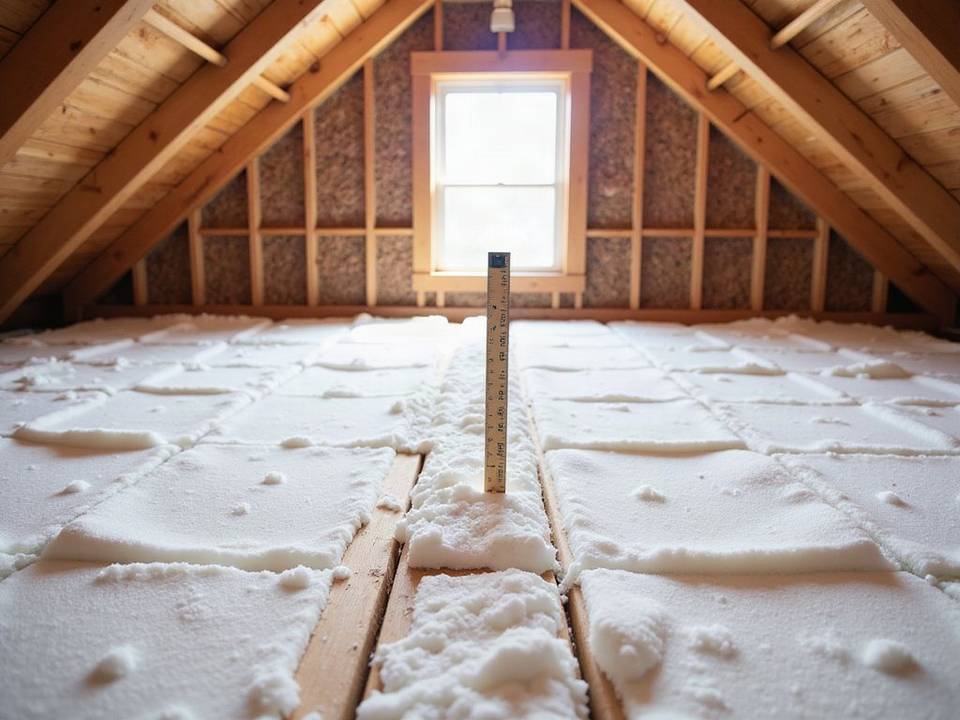
The fastest comfort upgrade for most homes
Blown in insulation is loose fiberglass or cellulose that we blow across the attic floor with a hose. It flows around joists, wiring and odd corners and builds up to an even, measured depth, so there are no gaps between pieces the way there can be with batts.
Most Bell County homes already have some attic insulation. The problem is that there is not enough of it, or it has packed down over the years. Topping it up to the recommended depth is usually the least expensive way to make the house cooler and cut summer bills.
ENERGY STAR recommends R-49 for an uninsulated attic in Central Texas, or adding R-38 if you already have 3 to 4 inches.
- Measured depth with depth markers so you can see what you paid for
- Fiberglass or cellulose, your choice, with the tradeoffs explained
- Air sealing of the biggest attic leaks before we blow
- Baffles at the eaves to keep soffit vents open
- Free inspection and a written price before work starts
Fiberglass or cellulose?
| Blown fiberglass | Cellulose | |
|---|---|---|
| Made from | Spun glass fibers | Recycled paper treated with fire retardant |
| Insulation per inch | About R-2.2 to R-2.7 | About R-3.2 to R-3.8 |
| Depth for the same R-value | Deeper | Shallower |
| Moisture | Does not absorb water | Can absorb water if the roof leaks |
| Settling | Settles very little | Settles more, so it is blown a little deeper |
Both work well in a dry attic. We lean toward fiberglass where roof leaks are a worry and cellulose where it fits a tighter budget or a shallow attic.
Is your attic short on insulation?
You can see the joists
If the tops of the ceiling joists show, there is not enough insulation.
Rooms that never cool down
Ceilings that feel warm in the afternoon are passing attic heat into the house.
Summer bills keep climbing
A short attic makes the AC run longer every hot day.
Insulation looks flat or patchy
Old insulation compresses, and gaps open up when people work in the attic.
Most attics are done in a few hours
Measure
We measure your current depth and check for damage, leaks and pests.
Seal and prep
Big air leaks get sealed and baffles go in at the eaves.
Blow to depth
Insulation goes in evenly to the depth on your estimate.
Check and clean
We confirm the depth with markers and clean up the work area.
What blown in insulation costs
Blown in insulation is usually the most affordable way to add attic depth. Attic size, the depth you are adding, the material and whether old insulation has to come out first all move the price.
We price every attic in writing after a free inspection. See what affects insulation cost.
Blown in insulation questions
Can you blow new insulation over my old insulation?
- Yes, if the old insulation is dry and clean.
- If it is wet, moldy or full of droppings, it should come out first.
How deep should it be?
- Depth depends on the material. R-38 is roughly 12 to 16 inches depending on the product.
- We use the manufacturer’s chart and mark the depth for you.
Will it make a mess in my house?
- No. The hose runs from the truck to the attic and we cover the path around the attic opening.
How long does it take?
- Most homes are finished in a few hours.
Blown in attic insulation near you
Get a free attic insulation estimate
Send the form and we will call you to set up your free inspection.