Spray foam insulation in Bell County, TX
Open and closed cell foam that seals the air leaks other insulation leaves open, for attics, walls, crawl spaces and metal buildings.
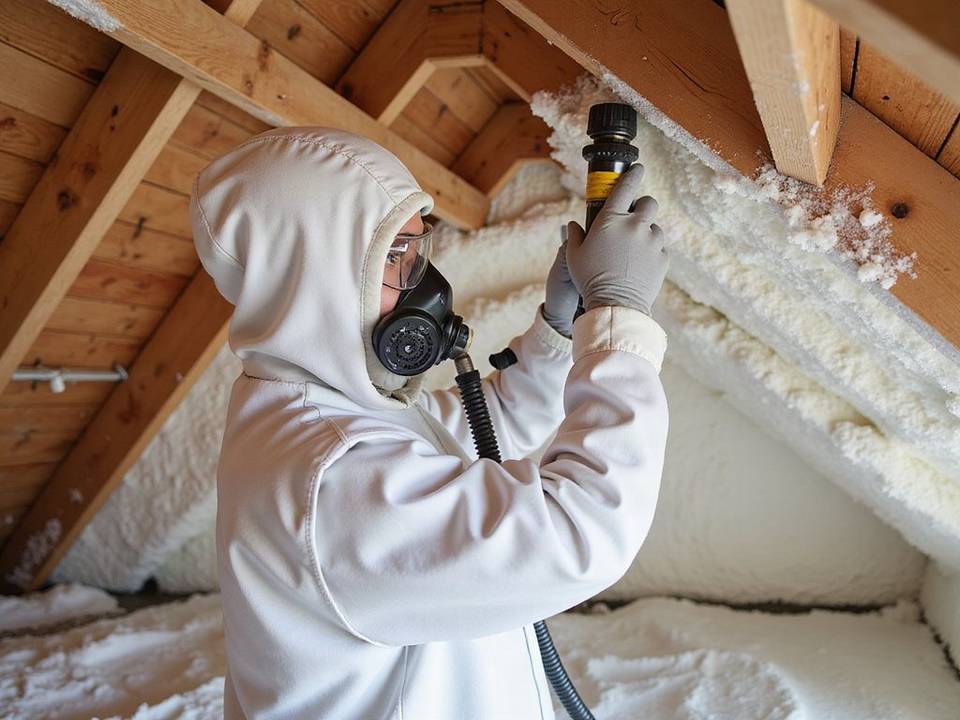
Insulation that also seals the house
Most insulation slows heat. Spray foam slows heat and stops air. It goes on as a liquid, expands to fill every gap and crack, and cures in place into a solid layer that does not settle or shift.
That matters in Bell County. Summer air in an attic can run far hotter than the air outside, and every small gap around a light, vent or wall top lets that heat into the rooms below. Foam closes those gaps in the same step that it insulates.
The most common job we do is open cell foam on the underside of the roof deck. That turns the attic into a semi conditioned space, so the air handler and ductwork up there are no longer working in extreme heat.
- Open cell foam for attic roof decks, walls and sound control
- Closed cell foam for metal buildings, crawl spaces and anywhere moisture is a concern
- Air sealing around top plates, penetrations and attic openings
- Coatings where code requires them, such as ignition barriers in accessible attics
- Free inspection and a written price before work starts
Open cell or closed cell?
Both are spray foam, but they do different jobs. We recommend one based on where it is going, not on what is easier to sell.
| Open cell | Closed cell | |
|---|---|---|
| Feel | Soft and spongy | Hard and rigid |
| Insulation per inch | About R-3.5 to R-3.8 | About R-6 to R-7 |
| Moisture | Lets water vapor pass | Acts as a vapor retarder |
| Price | Lower | Higher |
| Best for | Attic roof decks, interior walls, sound control | Metal buildings, crawl spaces, rim joists, tight spaces |
Want the longer version? Read open cell vs closed cell spray foam.
When spray foam is the right call
Ducts in the attic
Foaming the roof deck keeps the air handler and ductwork out of extreme attic heat.
A hot second floor
Sealing the attic helps upstairs rooms stay closer to the thermostat setting.
Leaky older homes
Foam closes the gaps that let hot, dusty air in around old framing.
Metal shops and barns
Closed cell foam insulates and stops the roof from sweating.
When it is not the right call: if your attic simply needs more depth and your ducts are in good shape, blown in insulation usually gives you more for the money. We will tell you if that is the case.
A spray foam job, start to finish
Inspect and measure
We check the roof deck, ducts, wiring and ventilation and measure the area.
Written estimate
Foam type, thickness and areas covered, in writing.
Prep and protect
Floors, walls and belongings are covered. Attic vents are handled as the design requires.
Spray, trim, clean up
Foam is applied to depth, trimmed where needed and the work area is cleaned.
What spray foam costs
Spray foam is priced by the board foot, which is one square foot at one inch thick. The total depends on the area, the thickness, the type of foam, access and prep. Open cell costs less per inch than closed cell.
We price every job in writing after a free inspection. See what affects insulation cost to know what to compare between quotes.
Spray foam questions
Will spray foam on the roof deck hurt my shingles?
- Roof deck foam is a common, code recognized approach in hot climates.
- Check your shingle warranty terms before you start. We are happy to walk through it with you.
Do I need to close my attic vents?
- With an unvented roof deck design, yes, the attic vents are sealed so the attic becomes part of the conditioned space.
- We explain the design for your house before any work starts.
Is there a smell?
- There is an odor while the foam is sprayed and curing.
- Plan to stay out of the house for the re-entry time the manufacturer specifies, usually about a day.
How long does a spray foam job take?
- Most attic jobs take one day, larger homes and metal buildings can take two.
Spray foam insulation near you
Get a free spray foam estimate
Send the form and we will call you to set up your free inspection.